

What is DHA
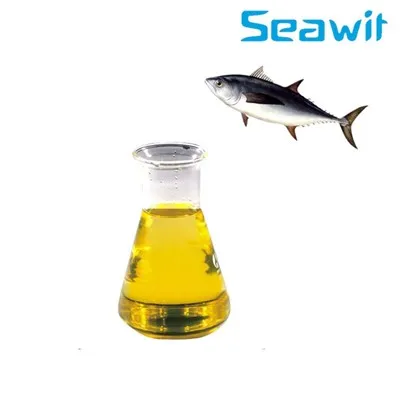
Docosahexaenoic acid (DHA) is an omega-3 fatty acid found together with EPA in cold-water fish like tuna and salmon. DHA is an important component of eye and nerve tissues. DHA is a common nutritional ingredient. It is used in supplements for brain and cognitive wellness, and nutritional support for infants and kids. DHA and EPA are both in fish oil but different. Only a small amount of DHA can turn into EPA in our body.
Benefits of DHA
Supports nervous system: Adequate DHA helps maintain normal brain function in adults. It also supports healthy brain development for babies and cognitive wellness as we age.
Supports fetal & infant development: Babies get DHA from placenta during pregnancy and breast milk after birth. It is an essential nutrient for neural development. Longer breastfeeding helps build DHA in cerebral cortex.
Supports eye health: DHA is a key part of retina. Studies show sufficient DHA from breast milk or fortified formula helps healthy visual development in infants.
Supports joint wellness: DHA helps maintain balanced inflammatory response in the body, which is good for joint comfort.




Why Choose Us
Honor and patents
Seawit had undertaken over 10 items related to national level, provincial level, and Qingdao city level, applied more than 30 items of patents, participated, and appointed 10 items of national and industrial standards. The company had gained many items of system certification related to food production licenses (containing 71 products), HACCP, FSC22000, ISO9000, export food record, FDA, BRC, and Kosher.
Advanced production technology
It is to cooperate with the world's top equipment manufacturing company, GEA-NIRO, and engineering enterprises to develop advanced production technology devices such as functional lipid purification, microencapsulation embedding, and human milk replacement.
Quality Control
Use advanced production technology in terms of submicron-scale emulsification and embedding, low-temperature spray drying and secondary spray embedding, and precision moderate processing to control product quality.
Our service
Seawit will continue to insist on being customer-oriented and creating the best value for customers. We will continue to develop the industry in terms of dairy, health care, and sports nutrition and aspire to be the best supplier of nutritional per-mix and mixed ingredients.
When taken by mouth: DHA is likely safe for most people. It's been used safely for up to 4 years. Most side effects are mild and involve stomach and intestine issues. But people shouldn't take more than 3 grams of DHA or other omega-3 fatty acids daily, and no more than 2 grams daily should come from a dietary supplement. Taking more than 3 grams daily of DHA and other omega-3 fatty acids is possibly unsafe. Doing so might slow blood clotting and increase the chance of bleeding. Pregnancy and breast-feeding: DHA is likely safe when taken by mouth in appropriate amounts during pregnancy and breast-feeding. DHA is commonly used during pregnancy and is an ingredient in some prenatal vitamins. DHA is also a normal part of breast milk and added to some infant formulas. It's recommended that 200-300 mg of DHA are consumed daily during pregnancy and breast-feeding, either from supplements or food sources.
Children: DHA is likely safe when used appropriately. DHA is included in some infant formulas. Also, DHA has been safely given to children 7 years and older at doses of 30 mg/kg daily for up to 4 years. It has also been safely given to children 4 years and older at doses of 0.4-1 gram daily for up to 1 year. But DHA is possibly unsafe when used in preterm infants born at less than 29 weeks. It might worsen breathing in these infants.

Uses
Attention-Deficit Hyperactivity Disorder (ADHD)
Because children need omega-3 fatty acids for their brains to develop properly, researchers have examined whether fish oil might reduce ADHD symptoms.
Heart Disease
Fish oil appears to help improve outcomes for people who already have heart disease. It may also lower the risk for developing heart disease. Omega-3 fatty acids found in fish oil help lower triglycerides (fats in the blood), lower blood pressure, reduce the risk of blood clots, improve the health of arteries, and reduce the amount of arterial plaque, which narrows arteries and causes heart disease. The American Heart Association recommends eating fish, particularly fatty fish, at least 2 times per week. Fatty fish include salmon, herring, lake trout, sardines and albacore tuna. People who already have heart disease may need fish oil supplements in addition to adding more fish to their diet.
Infant Development
DHA plays a crucial role in the growth and development of the central nervous system, as well as visual functioning in infants. Breastfed babies with healthy mothers should get enough DHA in breast milk.
Rheumatoid Arthritis
Several small studies found that fish oil may help reduce symptoms and inflammation linked with rheumatoid arthritis. However, it does not stop joint damage from getting worse.
Menstrual Pain
Fish oil seems to reduce the pain of menstrual cramps when taken on a regular basis (not just when menstruating).
Raynaud Syndrome
Several studies show that high doses (12 g) of fish oil can reduce sensitivity to cold in the fingers and toes of people with Raynaud syndrome. Doses this high should be taken only under a doctor's supervision.
Lupus
Preliminary studies suggest that fish oil may reduce the fatigue and joint pain associated with lupus.

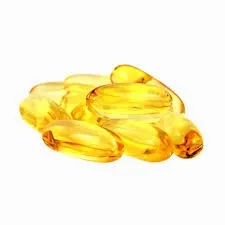
Fish oil capsules have both DHA and EPA. Supplements with EPA may not be recommended for infants or small children because they upset the balance between DHA and EPA during early development. Pregnant women should talk to their doctor before taking fish oil supplements.
Fish oil capsules may cause minor side effects, such as loose stools, stomach upset, and belching.
They may slightly increase the risk of bleeding. If you take blood-thinning medication, talk to your doctor before taking fish oil.
Fish oil may lower blood pressure. If you already take medication to lower blood pressure, talk to your doctor before taking fish oil.
Possible Interactions
Blood pressure medication: DHA may lower blood pressure, so it could make the effects of prescription blood pressure medication stronger. That could raise the risk of having low blood pressure.
Blood-thinners (anticoagulants and antiplatelets): EPA in fish oil supplements may increase bleeding time, so fish oil could make the effects of these drugs stronger. That does not seem to be true of DHA by itself. Blood thinners include warfarin (Coumadin), clopidogrel (Plavix), and aspirin.
Diabetes medications: Theoretically, fish oil supplements may lower blood sugar levels and could make the effects of diabetes drugs stronger. If you have diabetes, talk to your doctor before taking fish oil.
Aspirin: Combined with aspirin, fish oil could help treat some forms of heart disease, however, this combination may also increase the risk of bleeding. Talk to your doctor to see if this combination is right for you.
Cyclosporine: Omega-3 fatty acids may reduce some of the side effects of cyclosporine, which is often used to stop rejection after an organ transplant. Talk to your doctor before adding any new herbs or supplements to the medication you already take.
Strength
Check the total amount of epa and dha combined equals at least at least 1000-2000mg
Top tip: Check for the total amount of DHA/EPA on the label.
Many brands may look stronger because they have promoted the amount of total fish oil into their product. For example, a product may say “contains 1500 mg of fish oil” on the bottle, but when you check the label only 450 mg of the 1500mg of fish oil come from EPA and DHA. This means that only 450mg of the 1500mg of fish oil is of benefit to your health.
DHA and EPA are the active ingredients in fish oil that give it its known health benefits. Look for products on the market that have the higher levels of EPA and DHA to ensure you get more “bang for your buck”.
Purity & oxidation
●Check it's been tested for heavy metals
As our oceans experience more pressure from pollution it's important to check your fish oil has been tested for heavy metals. If not, you may be ingesting toxic heavy metals (like mercury) in your fish oil supplements that harm your health.
●Check that your omega-3 fats aren't damaged
Fats can become damaged when exposed to light, heat and air, making them oxidised. Damaged fats are one of the most harmful things to our health so be sure to check that your fish oil is tested for oxidation levels and is packaged in a light proof gelatin capsule and a dark container that ensures freshness and protection.
Check the label of any products to see if they mention strict low temperature, oxygen-free processing. Quality brands that follow this process will include it on the bottle. You can also call the company and they should be able to tell you what their last oxidation readings were.
Sustainability
Check that it's sustainably sourced
Choose a fish oil product that chooses sustainability. Check Best Fish Guide and avoid any fish that is at risk.
Small fish such as sardines are generally best as they are abundant in our oceans PLUS being a small top feeding fish they are also more free of heavy metals and toxins.
Dietary Sources


Flaxseed oil
One tablespoon of flaxseed oil has 7.26 grams of the ALA omega-3, more than seven times your daily recommendation. You can get 2.35 grams of omega-3 from a tablespoon of whole flaxseeds as well. Flaxseed oil has a low smoke point, a measure of how high oil can be heated before it starts to burn.
It's best used in dressings, dips, or smoothies. The seeds are great to add to cereals or baked goods. Or you can mix them with water to make a vegetarian egg substitute.
Canola oil
Because flaxseed oil isn’t suitable for cooking, canola oil’s high smoke point makes it a great way to add omega-3s to sautéed, fried, or baked dishes. You can use canola oil in place of most other cooking oils and get 1.28 grams of ALA in every tablespoon.
Chia seeds
With 2.53 grams of omega-3s per tablespoon, chia seeds are a good alternative for people who don’t like flaxseeds’ nutty taste. They also have high fiber and protein levels, making them a good source of nutrients for people on a plant-based diet.
Salmon
Almost all seafood has omega-3s, but cooked salmon is an especially good DHA and EPA source with 1.24 and 0.59 grams, respectively. While fresh fish doesn’t usually have ALA, canned salmon can have up to 0.04 grams in addition to its DHA and EPA content. Other large fish like mackerel, trout, tuna, and sea bass also have high omega-3 levels.
Foraging fish
After large fish like salmon, foraging fish have some of the highest levels of EPA and DHA omega-3s. This group includes herring, with 1.71 grams per 3-ounce serving, and canned sardines, with 1.19 grams.
Shellfish
Shellfish is a uniquely good source of omega-3s because many types have all three forms of omega-3s: ALA, DHA, and EPA. This includes oysters, with a total content of 0.67 grams per 3-ounce serving; lobster, with 0.21 grams; and scallops, with 0.15 grams for the same portion.
Walnuts
Walnuts are rich in many nutrients, including omega-3s. About seven walnuts have up to 1.28 grams of ALA. And if you include them in a chicken dish, you get an added boost. While a 3-ounce portion of chicken breast has only 0.03 grams of omega-3s, it’s made up of DHA and EPA, balancing your meal.
Soybeans
Soybeans and soybean products like tofu are a rich source of omega-3s, especially if you're a vegan or vegetarian. A 100-gram serving (about 2/3 cup) of edamame, which are boiled, salted soybeans served inside their pods, has 2.16 grams of omega-3s.
What Are the Sources of the Omega-3 Fatty Acid DHA
Alpha linolenic acid, converted at about 5% efficiency to EPA, is found in many plant based food products, vegetables, fruits and beans.
Long chain omega-3 fatty acids, EPA and DHA, with their wealth of associated health benefits, are found in seafood.
Fish o not produce omega-3 fatty acids naturally. They acquire them from their diet, much like humans, and accumulate them in flesh, muscle and other tissues. Algae are the real origin of omega-3 fats in all seafood products.
FAQ
As one of the most professional DHA oil manufacturers and suppliers in China, we're featured by high quality products made in China. If you're going to wholesale or buy discount DHA oil for sale, welcome to get pricelist from our factory. For customized service, contact us now.
DHA Omega 3 Supports Brain Health, algae omega 3, dha fish oil